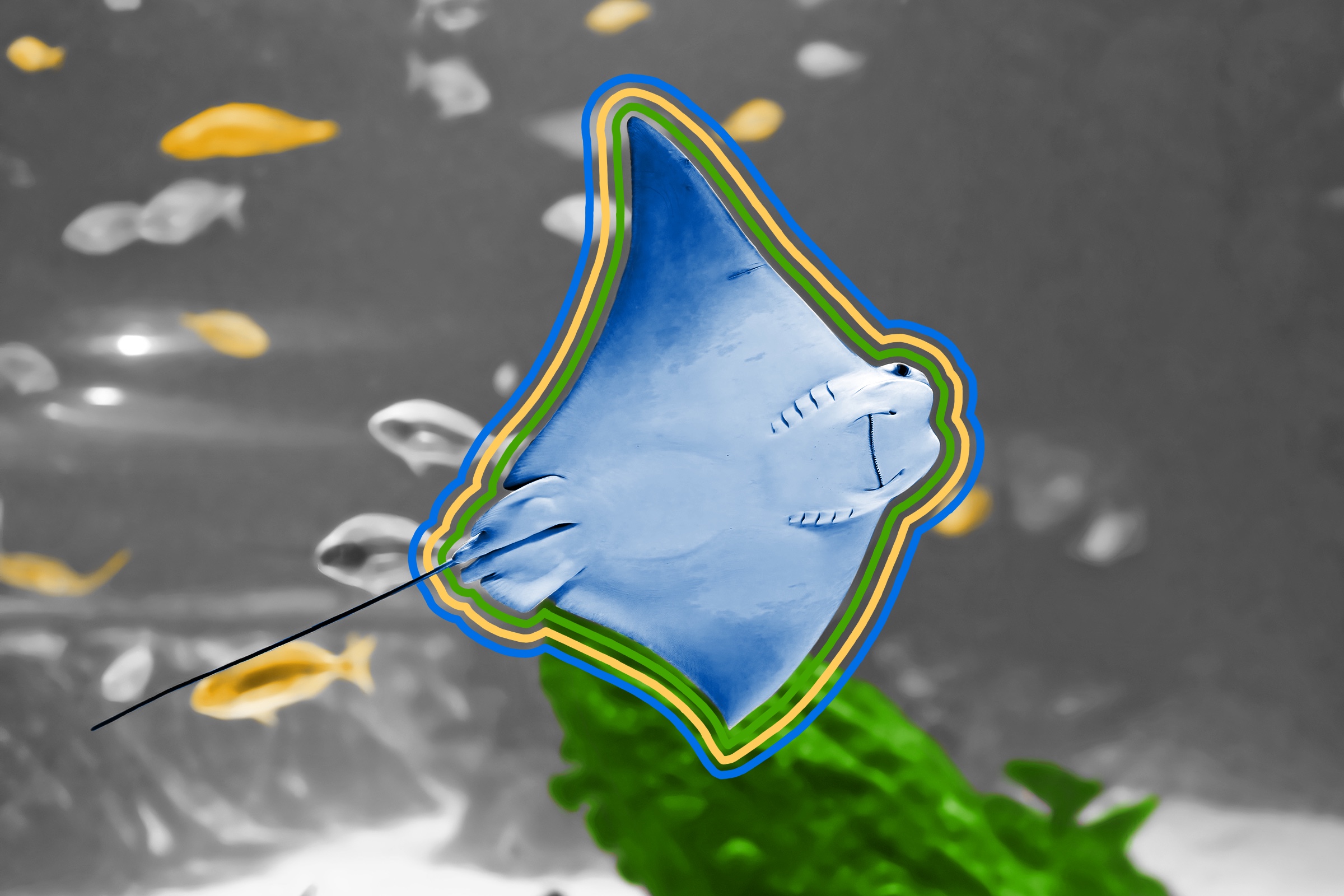
| Despite their near ubiquity — they're found in every ocean except the Arctic and Antarctic — stingrays remain enigmatic creatures. In fact, it was only recently discovered that one type of stingray, the cownose ray, appears to use its distinctive tail as an antenna to sense danger. That information comes to us from a 2025 paper published in Proceedings of the Royal Society by Júlia Chaumel and George V. Lauder, who write that the tails are "able to detect water disturbances resulting from prey, predators, body movements, and near body flow dynamics." For most types of stingrays, it has long been known that their tails are used to defend against would-be predators such as sharks. But in the Myliobatiformes order, which includes manta rays, devil rays, and cownose rays, the purpose of the tail was not previously clear. The study focused on cownose rays, whose tails are made up of stiff tissue covered in small holes; 3D scans revealed these holes are connected to the lateral line canal, a series of sensory organs that extend the length of the ray's body, including receptors in its skin that detect movement. That's especially useful for cownose rays, which bury their heads in the sand to feed on burrowing bivalves. Lacking eyes in the back of their heads, they rely on their antennae-like tails to warn them of incoming predators before it's too late. | 





0 komentar:
Posting Komentar