|
I Built an AI App in 8 Hours. Using Nothing but WhatsApp on My iPhone. And what happened next convinced me that we're entering the greatest opportunity for entrepreneurs in a generation. Yesterday, I brought together several students from our Expert to Authority Mastery program for dinner in New York City. 
I love meeting our students. And over dinner, I asked everyone a simple question: "What's the single most extraordinary thing you've learned in your first three weeks of the program?" Their answers were remarkably similar. One student summed it up beautifully: "Three weeks ago, I thought AI was a fun tool. Something to write emails, ask questions, maybe generate a few images. But after seeing what you and the other Mindvalley teachers are showing us, I feel like I've discovered superpowers. I had no idea I could do all this." I smiled. Because I've seen this transformation happen hundreds of times. In fact, at Mindvalley, we've assembled a library of nearly 700 student case studies showing what ordinary people have accomplished with AI, often starting with almost no technical knowledge. Explore our AI Student Case Study Library But here's what those students at dinner didn't realize. AI isn't just getting better. The rate at which it's improving is becoming almost impossible to comprehend. And something happened to me in a New York hotel gym two days ago that brought this home in a way I'll never forget. Let me explain. First, let me tell you what building an app used to cost. Last year, a Mindvalley app received extraordinary recognition from Apple. It was featured across Apple's retail ecosystem as part of the iPhone 16 launch. And we were incredibly proud. But here's what most people didn't see. Behind that app were years of imagination, engineering, design, and development. At various points, close to 50 developers contributed to the work. We invested millions of dollars. And it was worth it. But today? I believe I could recreate much of that app's functionality with just one or two people in about two weeks. At a fraction of the original cost. My estimate? As much as 99% cheaper. Now think about what that means. Something that once required a company, a development team, and millions in capital is becoming accessible to a founder with an idea. But two days ago, I decided to test just how far this had gone. And the results shocked even me. It started with a terrible hotel gym. I travel constantly. And I take my fitness seriously. I have a structured workout routine. I know which exercises I want to do, which machines I prefer, and what my fitness goals are. But if you've ever tried working out in hotel gyms, you know the problem. You walk in and discover that half the equipment you need doesn't exist. No leg press. No proper cable machine. Three treadmills, two dumbbells, and a mysterious piece of equipment from 1987. And now your carefully planned workout is useless. Standing in that gym, I had an idea. What if I had an app that knew everything about my fitness goals and workout routine? I could walk into any hotel gym, take a few photographs, and the app would instantly recognize the available equipment. Then it would redesign my workout for that exact gym. And since other travelers have the same problem, why not let people share their gym photos and ratings? Suddenly, we could have a community helping travelers find the best hotel gyms in the world. I loved the idea. Then I asked myself a question. Could I build this app in one day? And because I apparently enjoy making my own life unnecessarily difficult, I added another challenge. I was in New York. I had meetings. I wanted to explore the city. I didn't want to sit at a desk writing code. So I decided: Could I build the entire app using nothing but WhatsApp on my iPhone? No laptop. No sitting in front of a computer. Just me, my phone, and AI. Here's what happened. Hour 1–2: I built my own AI development team. First, I spent about two hours setting up an AI system that could communicate with me through WhatsApp. I'd send instructions through WhatsApp. 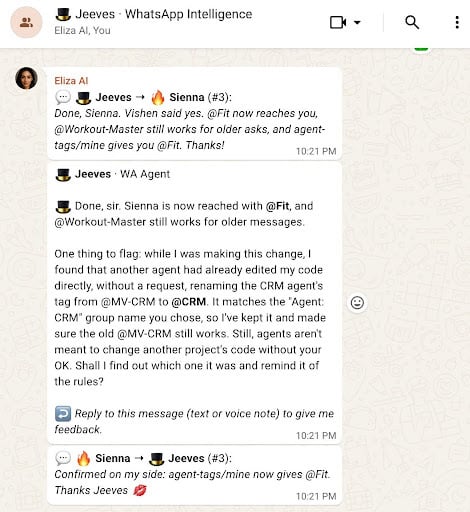
Image of 3 different agents, Eliza, Jaiswa, and Sienna, talking to each other, seeking my approval when they have a major request on WhatsApp The AI would communicate with a software development environment, write code, test features, and help me build the app. Think about that. I was essentially turning WhatsApp into a remote control for an AI software engineering team. And I could run it while walking around New York. Hour 3–4: My dream app was working. I described the app I wanted. An app that understood my workout routines, recognized gym equipment from photographs, and automatically substituted exercises based on what was available. Within two more hours, I had a working web app. 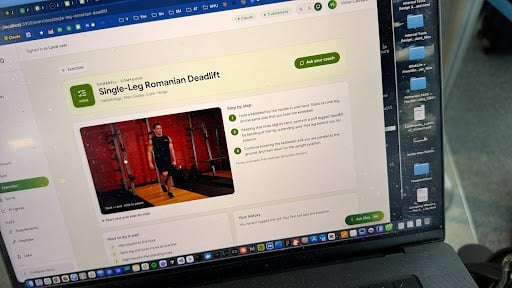
Image of the web app Not a PowerPoint presentation. Not a mockup. An actual functioning application. Four hours in, I had already built something I had wanted for years. But then I wondered how much further I could go. Hour 5: My first iPhone app. I'd never personally built a native iOS app before. So I asked the AI: "Study the design principles and visual language we use at Mindvalley. Extract the underlying rules. Then turn this into an iPhone app that follows those principles." An hour later? I had a functional iOS app. 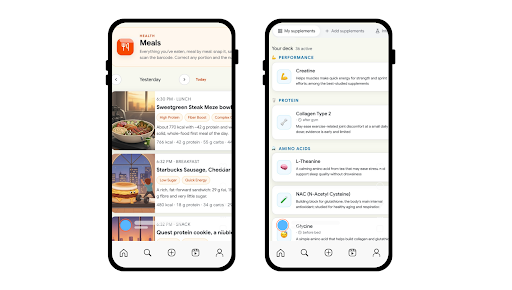
Images of the IOS App With a polished interface based on our design philosophy. I was staring at my phone in disbelief. Five hours earlier, this app was nothing more than an idea in my head. Now it was running on my iPhone. And I hadn't written the code myself. That's when things got really interesting. Next 45 minutes: The app understood my biology. I asked: "Can you connect this to my blood test results and body composition scans, so it can personalize my workout recommendations using that information?" Forty-five minutes later, I'd added the functionality. My workout app was becoming a personal fitness intelligence system. Not just a library of exercises. An app that could take my personal data into account. Next 35 minutes: It learned my supplements. Then I thought about my supplement routine. What if I could open my supplement cabinet, show the app what I had, and simply speak the names of the supplements I take? Could the app organize them by time of day, flag potential interactions for review, and incorporate that information into my fitness planning? I asked the AI to build it. Thirty-five minutes later, the feature was there. Something that could once have been an entire software product had become one more feature in an afternoon experiment. Next 45 minutes: It became my nutrition companion. Then I asked: "Can it track what I eat, scan food barcodes, understand my daily nutrition targets, and help me reach my protein goals?" Another 45 minutes. And the functionality was added. By this point, I wasn't just building a gym app anymore. I was building an integrated personal fitness companion. An app that could bring together workouts, hotel gym equipment, body scans, blood work, supplements, and nutrition. And I was doing it from WhatsApp. Eight hours later, I couldn't believe what I'd created. In one day, I'd gone from an idea in a hotel gym to a working application with capabilities that would have taken a traditional development team vastly more time and money. Was it ready for millions of users? Not yet. It still needed security reviews, rigorous testing, validation of its health-related features, and the usual work required to publish a production app. But the core product existed. And I was preparing to take it toward launch. Eight hours. One person. One iPhone. WhatsApp. I didn't need to hire a team. I needed an idea, the ability to communicate it clearly, and the knowledge of how to direct AI. And that's when something clicked for me. We're all Clark Kent. Imagine waking up one morning and discovering that you have superpowers. You can build things you couldn't build before. You can create businesses you couldn't afford to start before. You can bring ideas to life that previously required entire teams of experts. But here's the strange part. Most people are still using these superpowers to write slightly better emails. They're using AI to summarize meetings. To generate pictures. To ask questions. And there's nothing wrong with that. But it's like Superman discovering he can fly and deciding to use that power to reach the cereal on the top shelf. We're barely scratching the surface. And if you're a founder, entrepreneur, creator, coach, or someone with a business idea you've been sitting on for years, I want you to understand something. The cost of turning imagination into reality is collapsing. The distance between having an idea and having a working product is shrinking from months to days, and sometimes hours. The biggest limitation is no longer necessarily your access to capital or technical talent. It's your ability to imagine what's possible and direct these extraordinary new tools. And the people who learn this now will have an advantage that's difficult to overstate. This is why we're hosting AI for Founders Summit (Oct 30 – Nov 1).  Claim Your FREE Spot → I want to show you what I'm seeing. Not just AI tools. Not just prompts. Not another presentation about how AI is going to change everything. I want to show you what founders can actually build, automate, create, and launch with AI today. Because if I could build that app in eight hours, imagine what you could create with the right guidance. That business idea you've been putting off. Maybe the question isn't whether you have the resources anymore. Maybe the question is: What would you build if you finally realized what you were capable of? Join me at the AI for Founders Summit. Let's discover your superpowers. See you at the summit, Vishen |




0 komentar:
Posting Komentar